





Sheesham vs Mango vs Acacia Wood: Which Is Better?

Quick answer: Sheesham is valued for its strength and rich grain, mango wood offers design versatility and good value, while acacia is known for its density and distinctive natural patterns. All three can make durable furniture. The right choice depends on the design, construction, finish and how you plan to use it.
Choosing wooden furniture is not just about finding a design you love. The type of wood matters too, especially when you want a piece that looks beautiful, feels sturdy and fits comfortably into everyday life.
Sheesham, mango and acacia are three popular hardwoods used in Indian furniture. Each has its own grain, character and practical advantages. But which one should you choose?
Sheesham vs Mango vs Acacia Wood: Key Differences
Before looking at each wood individually, here is how they compare.
| Feature | Sheesham Wood | Mango Wood | Acacia Wood |
|---|---|---|---|
| Wood type | Hardwood | Hardwood | Hardwood |
| Appearance | Rich brown with darker grain patterns | Light to medium brown, often with varied natural tones | Warm brown with bold, contrasting grain |
| Hardness | Generally hard and dense | Moderately hard | Often hard and dense, depending on species |
| Weight | Generally heavier | Usually lighter than sheesham | Varies by species and construction |
| Durability | Very good for indoor furniture | Good with suitable construction and care | Very good for everyday furniture |
| Moisture resistance | Needs protection from prolonged moisture | Needs protection from prolonged moisture | Depends on species, treatment and finish |
| Price positioning | Often commands a premium | Often offers good value | Varies considerably by design and quality |
| Common uses | Beds, dining furniture, cabinets, sofas | Dining tables, storage units, coffee tables | Dining tables, beds, chairs, coffee tables |
These are general characteristics, not fixed rules. Wood quality, seasoning, construction and surface protection can make a significant difference to the finished piece.
Understanding the Three Types of Wood
1. Sheesham Wood: Rich Grain and Lasting Strength
Sheesham wood, also known as Indian rosewood, has long been used for furniture in Indian homes. Its rich brown tones and striking grain patterns give it a distinctive appearance.
Sheesham is a dense hardwood, making it suitable for substantial furniture such as beds, dining tables, sofas and cabinets. Its natural grain can range from relatively subtle lines to bold, darker streaks, so no two pieces look exactly alike. It is particularly appealing when the wood itself is an important part of the design.
Why choose sheesham wood?
- Strong and dense, making it suitable for everyday indoor furniture.
- Distinctive grain patterns that give each piece character.
- Works well with traditional, contemporary and sculptural designs.
- Suitable for furniture where a substantial, solid feel is desirable.
What should you consider?
Sheesham furniture can be relatively heavy, especially in larger pieces. Like other solid woods, it also responds to changes in humidity, so proper seasoning, finishing and care matter.

Emperor 3 Seater Sofa
The Emperor 3 Seater Sofa is one of the newest sheesham designs in the range. Its sheesham wood frame gives the living room the substantial, solid feel this hardwood is known for, while the upholstery keeps it comfortable for everyday seating.
Why sheesham works here: a sofa takes daily weight and movement, so a dense hardwood frame is a sensible foundation for a long-term living room piece.
View Product DetailsIn the bedroom and dining room, the Bicasso Queen Bed Without Storage shows sheesham in a contemporary design, with an American walnut finish that brings out the wood's warm character. The Dado Wooden Dining Chair offers another interpretation, pairing sheesham wood with upholstery.
These contrasting approaches are also reflected in our sheesham wood furniture designs, where the material's natural grain lends itself to everything from substantial beds to refined dining chairs.
Sheesham is also frequently compared with teak, another hardwood used in Indian furniture. Although both are valued for their durability, their appearance and properties differ. Our sheesham wood vs teak wood comparison explains these distinctions in greater detail.
2. Mango Wood: Versatile, Warm and Contemporary
Mango wood comes from the mango tree, which is also cultivated for its fruit. It is a genuine hardwood, although it is generally less dense than sheesham.
One of its most appealing qualities is its appearance. Mango wood can have light golden, honey and medium-brown tones, sometimes with darker variations. It also accepts different finishes, allowing it to suit a wide range of furniture styles.
Is mango wood good for furniture? Yes. When properly dried and constructed, mango wood is suitable for dining tables, coffee tables, cabinets and other indoor furniture.
Why choose mango wood?
- Offers a good balance of practicality, appearance and value.
- Works well with curved, rounded and contemporary furniture designs.
- Takes a variety of stains and surface finishes.
- Makes productive use of wood from mango trees, including trees retired from fruit production.
What should you consider?
Mango wood is generally softer than sheesham, so it may be more susceptible to dents under similar conditions. This does not make it unsuitable for furniture. The intended use, construction and protective finish are more important than hardness alone.
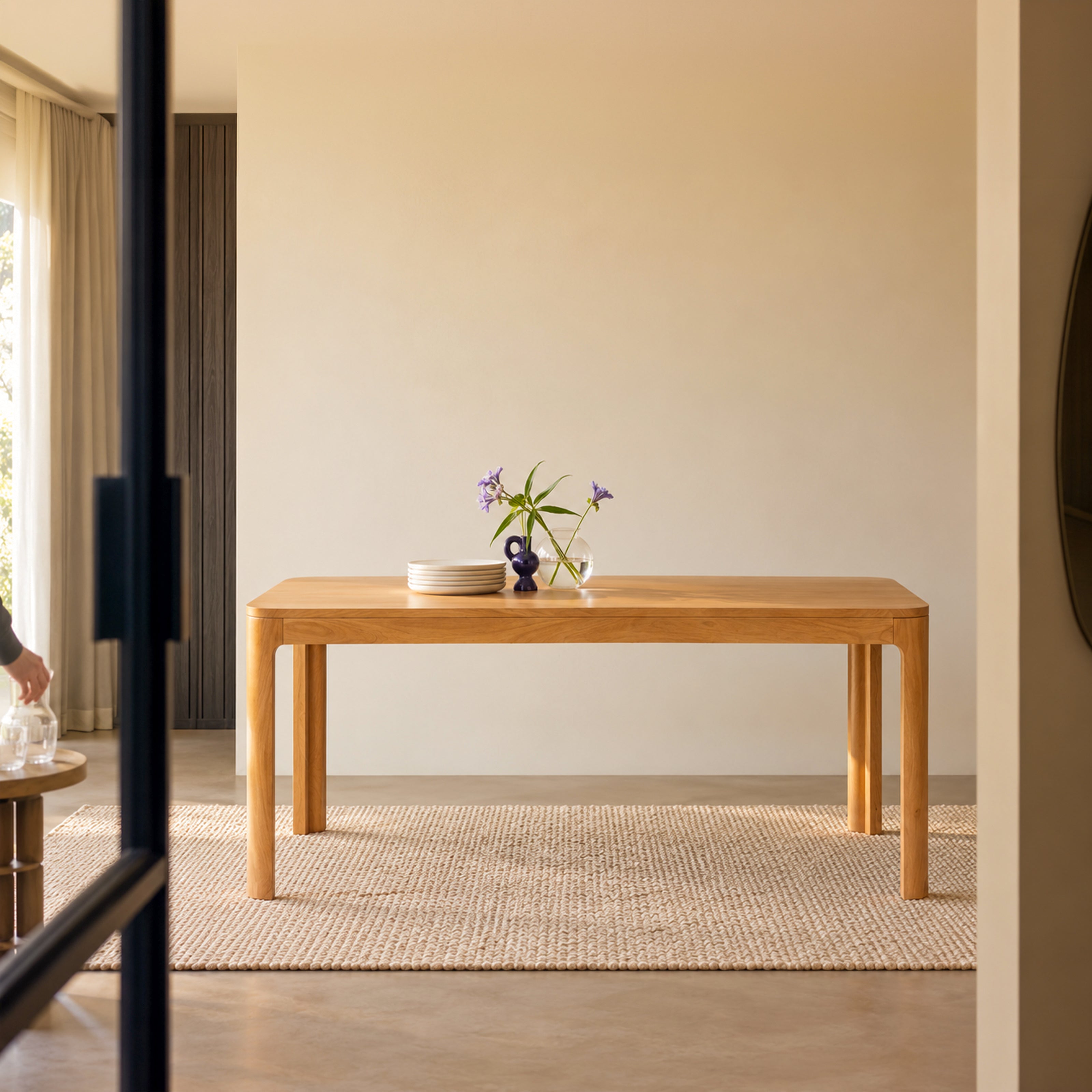
Portico 6 Seater Dining Table
Part of the new Portico collection, the Portico 6 Seater Dining Table shows how mango wood can be used in a refined contemporary design, with turned column legs and gently rounded edges.
Why mango works here: its warm tone and willingness to take curves make it ideal for a softer, more relaxed dining room, while the column legs give the tabletop steady support.
View Product DetailsThe Saanra Wooden Dining Table takes a different approach, with an oval form and a light wire-brushed finish.
The versatility of mango wood extends beyond dining furniture. The Portico collection's softly curved designs carry a consistent design language across living, dining and bedroom furniture, from the Portico Coffee Table to the Portico TV Unit, combining mango wood with complementary materials and finishes.
3. Acacia Wood: Strong Character and Everyday Practicality
Acacia is widely used in furniture for its attractive grain and strength. It often features flowing patterns and contrasts between lighter and darker sections of wood.
Acacia is also a broad commercial name covering different species, which means its hardness, density and moisture resistance can vary. It is better to judge the actual furniture than assume every acacia product has identical properties.
Is acacia wood good for furniture? Yes. It is an excellent option for many indoor furniture designs, particularly dining tables, coffee tables, bed frames and chairs.
Why choose acacia wood?
- Many furniture-grade varieties are hard and dense.
- Expressive grain patterns add depth to wooden surfaces.
- Suitable for regularly used furniture when correctly constructed.
- Works with both natural wood tones and darker finishes.
What should you consider?
Acacia is not automatically waterproof or suitable for outdoor use. A piece designed for indoor use still needs protection from rain, standing water and prolonged exposure to strong sunlight.

Cavallo Wooden Dining Table
The Cavallo Wooden Dining Table pairs acacia wood with mild steel detailing, letting the timber's bold, contrasting grain take centre stage on the tabletop.
Why acacia works here: a dining table sees daily meals and frequent use, and a dense acacia surface with a protective finish suits that kind of everyday wear.
View Product DetailsThe Twilight Wooden Dining Table pairs sculptural forms with a dark walnut finish. In the bedroom, the Meadow Non Storage Cane Bed combines an acacia wood frame with natural cane.
Sheesham vs Mango vs Acacia: Which Is Stronger?
If strength is your main concern, the comparison needs a little context.
Sheesham is generally denser and harder than mango wood. Many acacia species are also hard and dense, but their properties differ, so it would be misleading to declare acacia stronger than sheesham in every case.
Hardness tells us something about a wood's resistance to dents. It does not tell us everything about the quality or strength of a finished piece of furniture.
For example, a dining table also depends on its leg construction, joints, tabletop support and overall design. A bed needs a stable frame, secure connections and suitable mattress support.
A well-made mango wood table may perform better in everyday use than a poorly constructed table made from a harder wood. This is why the quality of construction matters just as much as the species of wood.
Which Wood Is Best for a Bed, Dining Table or Coffee Table?
Rather than choosing one wood for your entire home, it makes more sense to consider what each piece of furniture needs to do.
Best wood for beds
A bed needs to support weight consistently, remain stable and have secure joints.
Sheesham and acacia are both suitable choices for sturdy wooden bed frames. Mango wood can also be used successfully when the frame is properly engineered and supported.
If you prefer a substantial wooden bed with rich grain, sheesham may appeal to you. For a design that combines timber with upholstery, cane or other materials, acacia offers plenty of possibilities.

Bicasso Queen Bed Without Storage
The Bicasso Queen Bed Without Storage is crafted in sheesham wood with an American walnut finish, giving the bedroom a solid, grounded centrepiece with visible natural grain.
Bedroom tip: a non-storage frame keeps the design open and easy to clean underneath. Check the mattress size it is designed for before ordering.
View Product DetailsBeyond the wood, check the central support, frame connections, storage mechanism if applicable, and the size of the mattress the bed is designed to hold. If you need under-bed storage, the new Portico King Size Storage Bed carries the collection's softly rounded design into the bedroom.
Our wooden bed designs show how different materials and forms can shape the overall bedroom.
Best wood for dining tables
Dining tables are used frequently and need a surface that can handle daily meals, serving dishes and occasional spills.
Sheesham and acacia are good options when you want a dense hardwood with prominent grain. Mango wood is also a practical choice and allows for a wide variety of shapes and finishes.
For a dining table, pay particular attention to the protective finish. A harder timber does not automatically mean the finished tabletop will resist water rings, hot vessels or scratches.
Also consider the shape and support of the table. A well-supported rectangular table and a sculptural pedestal table may use the same timber but behave differently under load.
If you are deciding between seating capacities, our dining table dimensions guide can help you choose a comfortable size for your room.
Best wood for coffee tables and storage furniture
Coffee tables, side tables and cabinets give you more freedom to consider appearance alongside strength.
Mango wood works particularly well for softly curved and sculptural pieces. Acacia can bring expressive grain and a strong visual presence to a living room. Sheesham is ideal when you prefer deeper tones and a more pronounced natural texture.

Otto Cloud Coffee Table
From the new Alchemy collection, the Otto Cloud Coffee Table has a free-form solid mango wood top resting on three column legs, a good example of how easily mango takes soft, sculptural shapes.
Living room tip: its rounded, free-form outline is easy to walk around, which makes it a practical choice for smaller living rooms.
View Product Details
Archie Spindle Coffee Table
The Archie Spindle Coffee Table sets a round, black-finished acacia top on four turned spindle legs, showing how well acacia works with darker finishes.
Style tip: the dark top adds contrast against lighter floors and upholstery, and the round shape suits square seating layouts.
View Product DetailsIf you prefer mixed materials, the Hugo Coffee Table pairs a smoked glass top with a sculpted mango wood base, while the Enzo Coffee Table sets a black marble top on acacia columns. Explore the full Alchemy collection for more sculptural coffee tables, side tables and poufs.
For storage furniture, look beyond the visible exterior. Drawer construction, hinges, shelves, panels and hardware all affect how the piece functions over time.
There is no need to select the hardest available wood for every surface. Choose a piece that is well constructed and suited to its purpose.
Which Wood Is Better for Indian Weather?
India's climate varies considerably. A wooden table in a dry, air-conditioned room experiences different conditions from one placed near an open window during the monsoon.
All three woods absorb and release moisture from the surrounding air. This natural behaviour can cause small changes in dimensions over time.
The important factor is not simply whether furniture is made from sheesham, mango or acacia. It is whether the timber has been properly dried, the furniture is well constructed and the surface has been suitably protected.
For Indian homes, a few precautions are useful:
- During monsoon: Keep furniture away from persistent dampness, water seepage and wet walls.
- In summer: Avoid prolonged direct sunlight that can affect the finish and colour.
- In air-conditioned rooms: Do not place furniture directly in the path of strong, continuous airflow.
- During winter: Keep wooden furniture away from room heaters and other concentrated heat sources.
No wood should be treated as completely waterproof simply because it is dense or described as moisture-resistant.
The same applies to insects. Sheesham, mango and acacia can all be affected by termites or wood borers under certain conditions. Proper processing, preventive treatment and ongoing inspection are more dependable than assuming any wood is naturally immune.
What Matters More Than the Type of Wood?
Two pieces made from the same wood can differ greatly in quality. Before buying, there are a few details worth checking.
- Wood seasoning: Wood should be appropriately dried before furniture is manufactured. Excess moisture can increase the risk of movement, warping and joint problems as the furniture adjusts to its surroundings.
- Construction and joints: Look for well-supported surfaces, secure connections and a stable structure. For beds and dining tables, construction deserves as much attention as the visible finish.
- Surface finish: The finish influences how furniture handles ordinary use, cleaning and minor spills. Ask what type of finish has been applied and which cleaning products are suitable.
- Material specifications: Check whether the product uses solid wood throughout or combines solid wood with veneer, metal, upholstery, stone or engineered panels. Mixed-material furniture can be an excellent design choice when the materials are correctly specified.
- Everyday use: A dining table, decorative console and bed frame have different requirements. Match the furniture to its actual use rather than choosing on the basis of wood hardness or price alone.
For a broader explanation of material selection, our guide to choosing the best wood for furniture in Indian homes covers additional options, including teak and oak.
How to Care for Sheesham, Mango and Acacia Furniture
The basic care routine is similar for all three woods, although the exact instructions depend on the applied finish.
- Dust regularly with a soft, dry cloth. For ordinary marks, use a slightly damp, soft cloth if permitted by the manufacturer's care instructions, then dry the surface.
- Wipe up spills promptly, use coasters under glasses and protective mats beneath hot serving dishes.
- Avoid harsh chemicals, abrasive cleaning pads and prolonged exposure to water or sunlight.
- Do not apply oil, wax or furniture polish without first confirming that it is compatible with the finish.
A little consistent care is more useful than frequent polishing with products that may not suit the surface.
So, Which Wood Should You Choose?
The best way to decide between sheesham, mango and acacia is to consider the finished furniture rather than the wood name alone.
- Choose sheesham if you love rich grain patterns and want a dense hardwood for substantial indoor furniture.
- Choose mango wood if you appreciate warm natural tones, contemporary forms and a good balance of design and value.
- Choose acacia if you want a hardwood that often combines high density with striking grain and suits a wide variety of everyday furniture.
Ultimately, the sheesham vs mango vs acacia wood comparison does not have one winner for every home. A thoughtfully designed, properly constructed piece in any of these woods can be a worthwhile choice.
What matters most is finding furniture that suits the way you live, the space it occupies and the care you are comfortable giving it.
FAQs
1. Is sheesham wood better than mango wood?
Sheesham is generally denser and harder than mango wood, making it a good choice for substantial indoor furniture. Mango wood is also a durable hardwood when properly processed and constructed. The better choice depends on the furniture design, budget and intended use.
2. Is acacia wood better than sheesham wood?
Not necessarily. Sheesham is valued for its density and rich grain, while many acacia species are also hard and suitable for frequently used furniture. Acacia's properties vary by species, so construction, treatment and finish should influence your decision.
3. Which is stronger, acacia or mango wood?
Many furniture-grade acacia species are harder and denser than mango wood, but this varies with the species. Both can be used for durable furniture. The quality of the timber, joints and overall construction is essential.
4. Is mango wood durable enough for a dining table?
Yes. Properly dried and constructed mango wood can work well for everyday dining tables. Use coasters and placemats, wipe spills promptly and follow the finish-specific cleaning instructions. The Portico 6 Seater Dining Table and Saanra Wooden Dining Table are examples of mango wood used in contemporary dining designs.
5. Which wood is more expensive: sheesham, mango or acacia?
Sheesham often commands a higher price than mango wood, while acacia prices can vary widely. However, there is no fixed price ranking. The design, quality, dimensions, finish and construction can affect furniture pricing more than the wood species alone.
6. Are sheesham, mango and acacia woods termite-proof?
No. None of these woods is completely termite-proof. Their susceptibility can vary, but proper wood processing, preventive treatment, dry storage conditions and regular inspection remain important.
7. Which wood is best for a coffee table?
All three work well, because coffee tables carry lighter loads than beds or dining tables. Mango suits soft, sculptural shapes such as the Otto Cloud Coffee Table, while acacia suits darker finishes and turned details, as seen in the Archie Spindle Coffee Table. Choose based on your room's style and the finish you prefer.
8. Does Orange Tree offer furniture in sheesham, mango and acacia wood?
Yes. All three woods feature in different furniture designs. The sheesham wood furniture collection includes beds, sofas, dining furniture and occasional pieces with distinctive natural grain. The mango-wood-led Portico collection brings together softly curved furniture for living, dining and bedroom spaces, with selected designs incorporating veneers and stone. Acacia is used across the range, including the Cavallo Wooden Dining Table and several pieces in the new Alchemy collection.


